
Wind Microclimate Assessment
Campion Plaza, Gibraltar
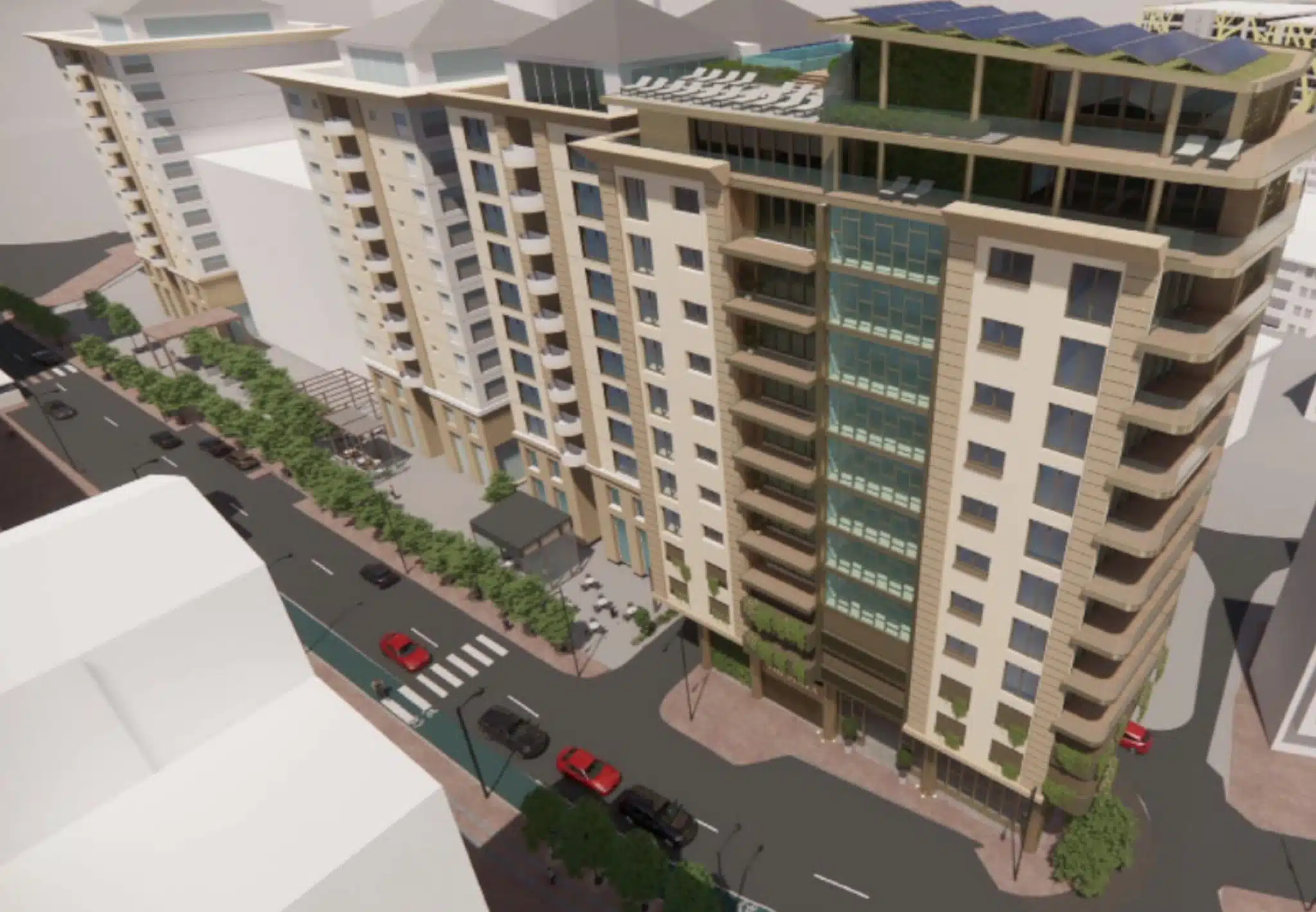
Windtech was appointed to undertake a comprehensive wind microclimate assessment and wind study for Campion Plaza, Gibraltar. Due to Gibraltar’s unique and complex topography, the site is subject to severe and highly accelerated wind conditions influenced by the Rock of Gibraltar.
To secure an exact assessment of pedestrian-level wind conditions, Windtech implemented a two-stage Computational Fluid Dynamics (CFD) methodology. The process initiated with a large-scale topographical wind study, followed by a detailed, localised wind microclimate assessment.
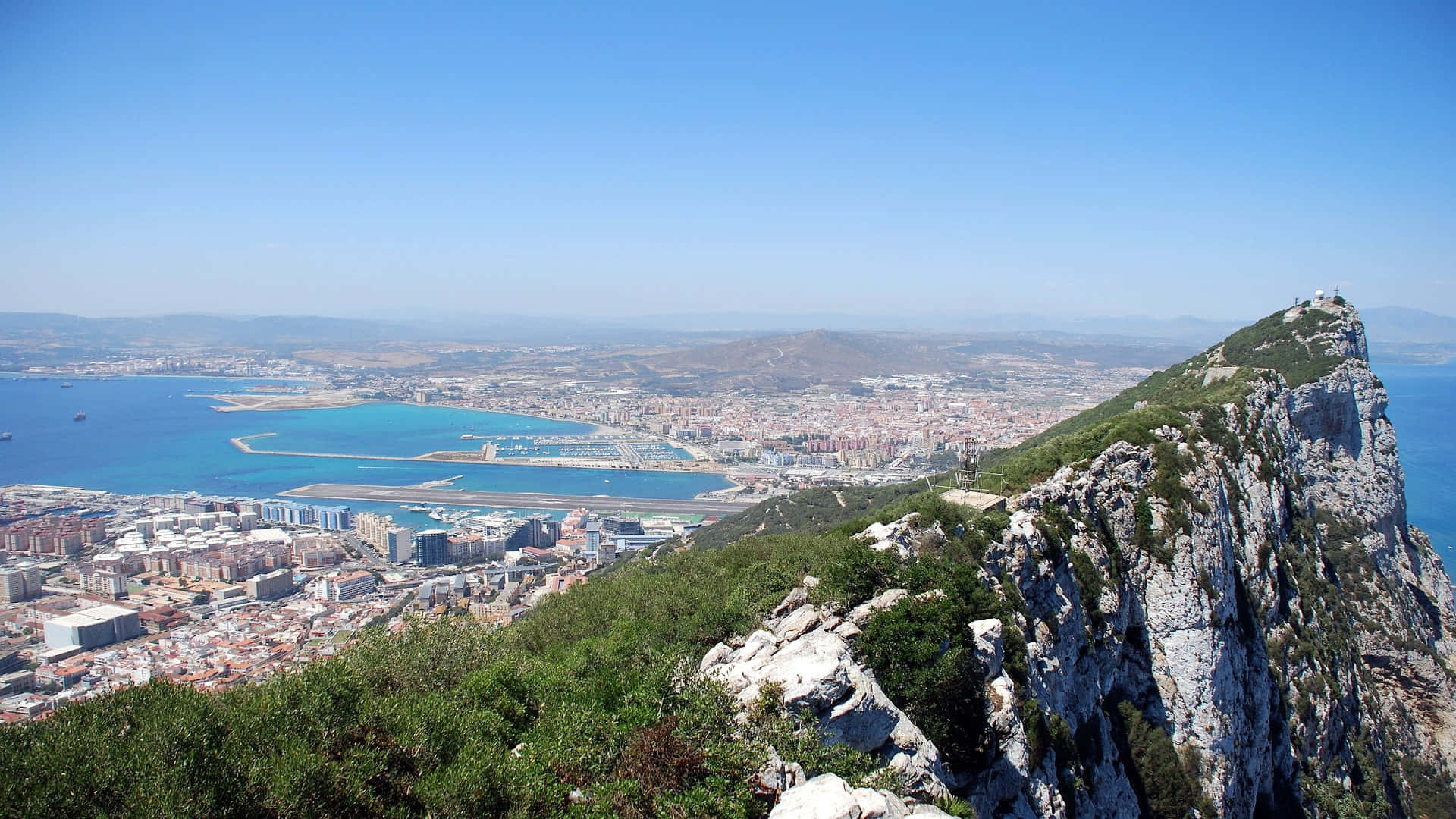
Gibraltar experiences some of the most complex wind behaviours in Europe. The Rock of Gibraltar acts as a significant topographical barrier, accelerating airflow and generating turbulence as winds move around and over the terrain.
For developments such as Campion Plaza, this creates multiple challenges:
-
-
- Accelerated wind speeds at the pedestrian level
- High turbulent intensity
- Complex wind directionality
- Non-uniform boundary layer conditions
-
Traditional microclimate assessments often assume simplified or uniform wind inputs. However, for a site such as this, such assumptions would not accurately reflect the real environmental conditions. A more advanced and site-specific methodology was required.

The Rock of Gibraltar at dusk
Our Approach
1.Topographical CFD Wind Study
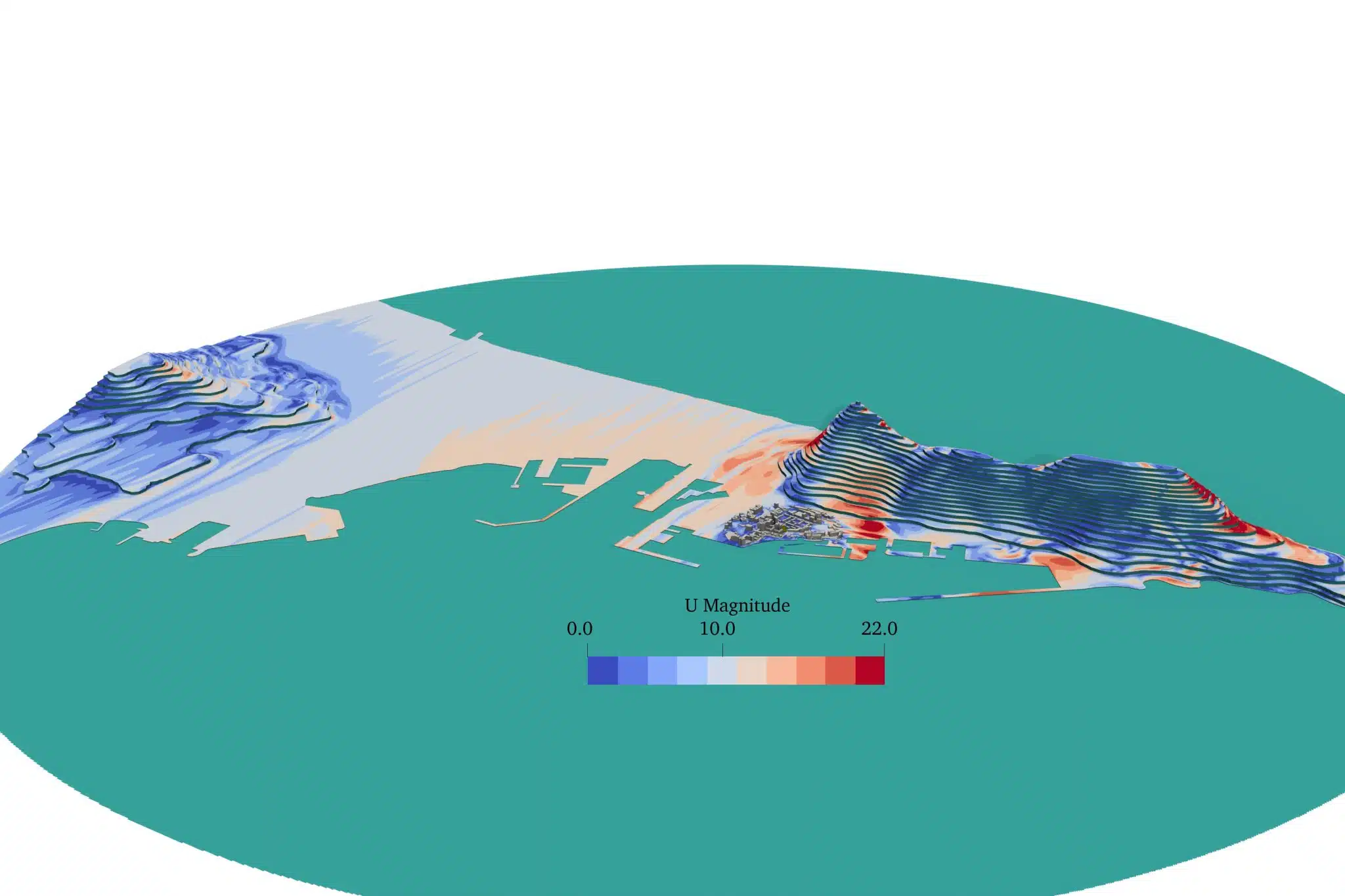
Windtech first conducted a large-scale topography CFD wind study to understand how wind interacts with Gibraltar’s terrain.
This study enabled the extraction of:
-
-
- Wind speed and direction profiles at specific site locations
- Turbulence intensity data
- Turbulence length scales
- Terrain-driven acceleration effects
-
By analysing the broader wind environment, Windtech developed accurate, site-specific boundary conditions for subsequent microclimate modelling.
2. Wind Microclimate Assessment
Using outputs from the topographical CFD model, Windtech conducted a detailed pedestrian-level wind microclimate assessment for Campion Plaza.
Rather than assuming uniform inflow conditions, the model incorporated realistic wind characteristics derived from the terrain study. This approach significantly improved the reliability and robustness of the assessment.
The microclimate CFD study evaluated:
-
-
- Pedestrian comfort levels
- Wind safety criteria
- Areas of potential wind acceleration or discomfort
- Turbulence impacts around buildings and public realm spaces
-
The Outcome
By integrating a topographical wind study into the wind microclimate assessment, Windtech delivered:
-
-
- Highly accurate and site-specific boundary conditions
- Improved confidence in pedestrian wind comfort predictions
- A clear understanding of large-scale and localised wind behaviour
- A robust evidence base to inform design decisions
-
This combined methodology ensured that the development’s wind environment was assessed using realistic, terrain-driven wind inputs rather than simplified assumptions, a critical factor in complex locations such as Gibraltar.
Why This Matters
In regions with complex terrain, a standard wind study may not be sufficient.
Windtech’s approach demonstrates that coupling a topography-based CFD wind study with a detailed wind microclimate assessment significantly improves modelling accuracy, particularly in environments influenced by large-scale geographic features.
Campion Plaza is a strong example of how advanced CFD techniques can be used to address challenging wind environments and support confident, evidence-based design decisions.
If you are working on any projects that could benefit from the capabilities presented in this article, please reach out to our regional offices in Sydney & Melbourne, Australia, London, UK, and Mumbai, India. New York & Miami, USA, Toronto, Canada, Dubai, Hong Kong & Singapore, we guarantee to support you wherever you are based.
To get regular updates on news and events, please follow us on our LinkedIn page.