
Why Environmental and Wind Studies Are Essential in Modern Planning Applications
Posted on March 12, 2026
As cities grow denser and buildings rise taller, environmental performance studies have become a critical part of the planning process. These studies ensure new developments integrate appropriately with their surroundings while maintaining adequate daylight, sunlight, and pedestrian comfort.
For a wind engineer, these technical assessments help translate architectural ideas into buildings that perform effectively in the real world. Through modelling and analysis, engineers can understand how a proposed development will interact with its environment long before construction begins.
At Windtech, these environmental assessments are carried out alongside wind tunnel testing to support planning applications. Together, they offer valuable insight into a building’s impact on surrounding properties, public spaces, and the site’s microclimate.
Environmental Studies and the Planning Process
Planning authorities increasingly require developments to demonstrate that they will not adversely affect neighbouring buildings or public spaces. These assessments are central to this evaluation.
These wind studies typically address questions such as:
- H2. How will the development affect daylight levels in nearby properties?
- H2. Will the surrounding outdoor spaces still receive adequate sunlight?
- H2. How will the building influence wind conditions at street level?
Addressing these issues early allows project teams to refine building form and orientation before final planning submissions, often avoiding costly redesigns later.
For wind engineers, this stage provides an opportunity to identify potential wind-related issues early, ensuring pedestrian comfort and safety are incorporated as the design evolves.
Daylight and Sunlight Metrics Used in Environmental Studies
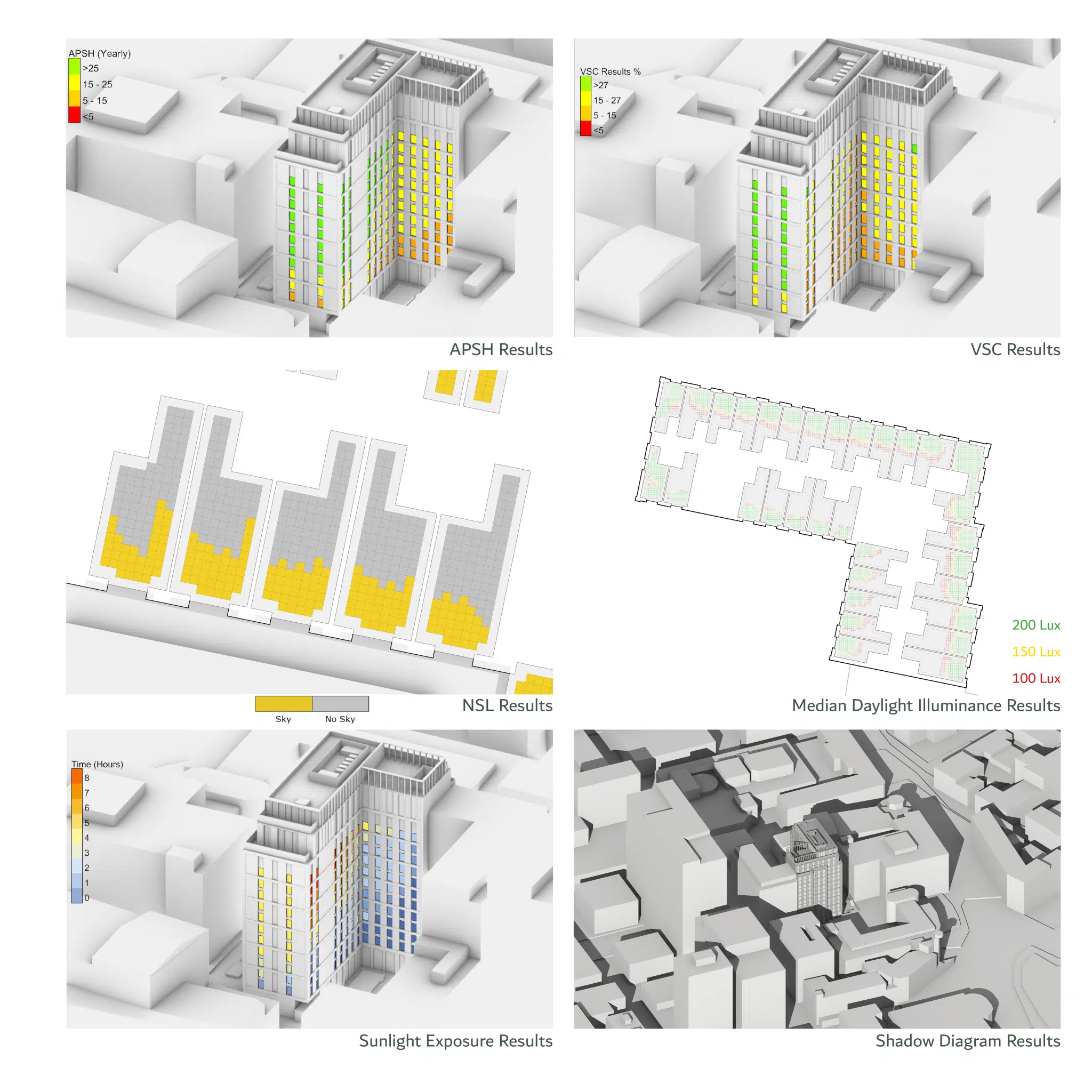
Environmental assessments use established metrics to quantify the availability of daylight and sunlight within buildings and surrounding areas.
Vertical Sky Component (VSC)
VSC measures the proportion of visible sky from the centre of a window, expressed as a percentage. It compares actual daylight received to the amount available with an unobstructed sky.
Annual Probable Sunlight Hours (APSH)
APSH measures the annual direct sunlight reaching a window over the course of a year, accounting for surrounding buildings. It helps determine if residential spaces receive sufficient sunlight.
No Sky Line (NSL)
The NSL test identifies areas of a room where the sky is not visible due to external obstructions, helping determine how far daylight penetrates into interior spaces.
Sun Hours on Ground
Sun Hours on Ground measures direct sunlight reaching outdoor areas such as courtyards, streets, or plazas. These studies are often conducted for specific reference days, such as the spring equinox.
Together, these measurements give planners and designers a clear understanding of how a proposed development may affect indoor environments and surrounding public spaces.
Supporting Planning Applications at Different Design Stages
Environmental studies can be undertaken at multiple stages of the design and planning process.
In early design phases, preliminary modelling helps architects refine building massing and orientation, ensuring proposals align with planning expectations before formal submission.
For outline planning applications, where internal layouts are not yet defined, environmental analysis typically focuses on the building envelope and its potential impact on neighbouring properties.
At the detailed planning stage, comprehensive modelling is conducted in accordance with standards such as BS EN 17037 – Daylight in Buildings. Climate-based daylight modelling evaluates interior daylight performance and confirms compliance with guidelines.
Visual outputs are typically produced alongside technical results to help planners and design teams understand the implications of the modelling.
Cambridge Business Park Redevelopment
Environmental analysis supported the planning submission for the proposed redevelopment of Cambridge Business Park.
The masterplan aims to transform the business park into a mixed-use district with residential homes, laboratories, office space, retail, and community facilities. The scheme includes approximately 210 residential units, co-living accommodation, and supporting amenities.
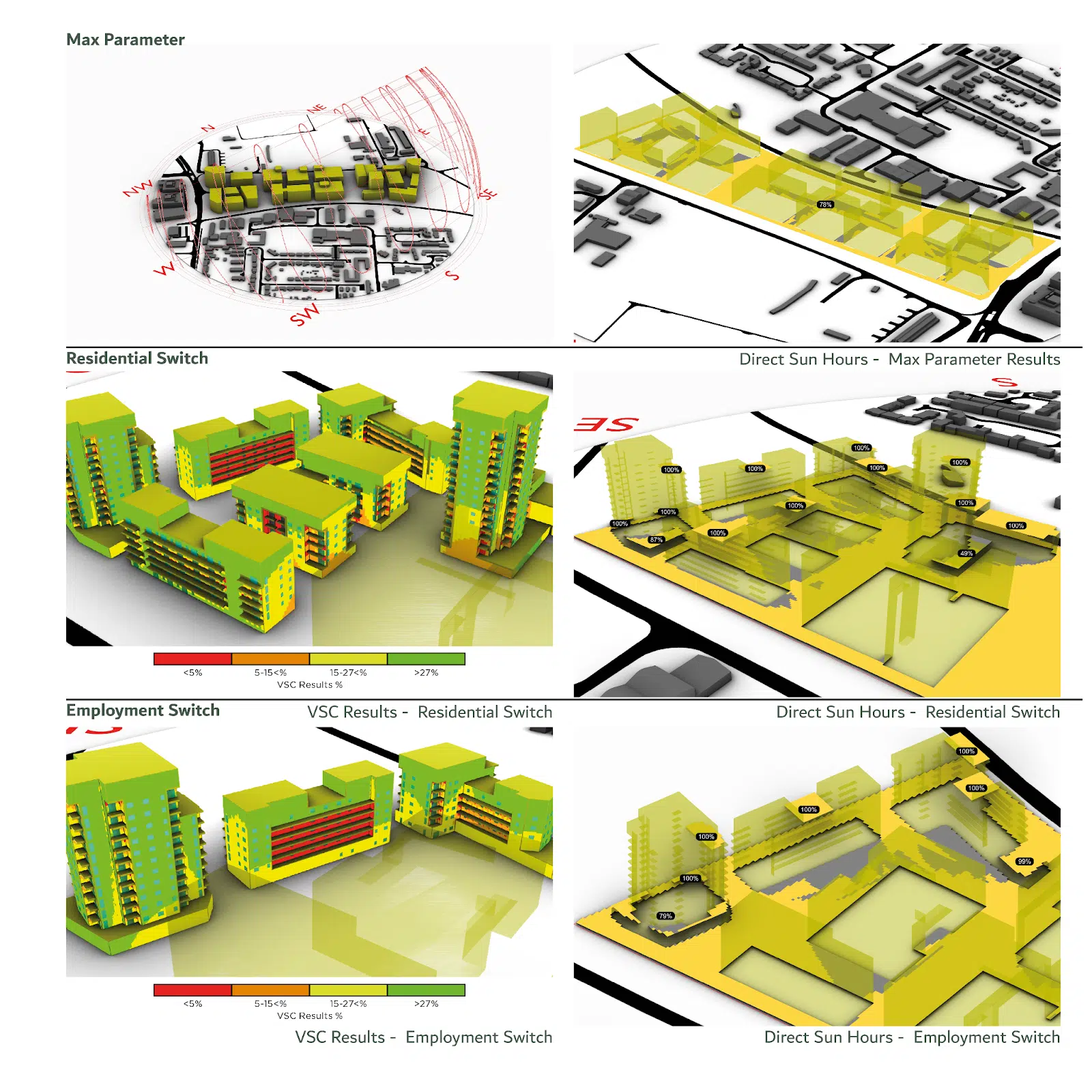
Windtech conducted an environmental study for the outline planning application. As internal layouts were not finalised, the assessment focused on external metrics such as VSC, APSH, and site-wide sunlight availability.
Three development scenarios were analysed to provide flexibility in the planning process. This enabled planners and designers to understand how different configurations could affect daylight and sunlight in the surrounding area.
The results were included in the Environmental Statement supporting the planning application.
Waverley House Redevelopment, Bournemouth
Windtech also carried out environmental modelling for the Waverley House redevelopment in Bournemouth.
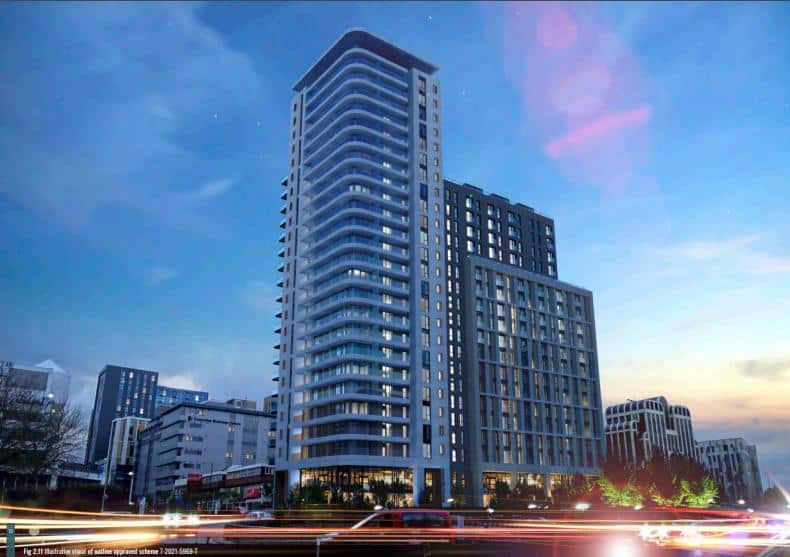
The proposal replaces a seven-storey office building with a 27-storey mixed-use development, including purpose-built student accommodation, commercial space, and shared amenities such as study areas, lounges, a gym, and a public café.
To support the planning application, Windtech carried out a detailed daylight and sunlight study using detailed 3D modelling tools. The analysis assessed potential impacts on surrounding buildings and public spaces while also evaluating the daylight performance within the proposed development itself.
The study provided clear technical evidence for the planning submission, and the project has since received planning approval.
The Role of Wind Engineering in Environmental Design
While daylight and sunlight studies address solar access, building height and massing also affect local wind conditions. Wind engineering is, therefore, an important complementary discipline within environmental design.
Design changes made to improve daylight performance can also affect wind behaviour around a building. Therefore, environmental and wind studies are often considered together to ensure outdoor spaces remain comfortable and usable.
By working closely with architects and planners, wind engineering consultants help ensure developments achieve a balance between strong environmental performance and comfortable public spaces.
Supporting Better Urban Design
Environmental studies are now a fundamental aspect of responsible urban development. Understanding how buildings interact with sunlight, daylight, and wind enables project teams to design more comfortable, well-integrated spaces.
At Windtech, these studies are part of a broader approach to environmental performance. Combining wind engineering with environmental modelling enables holistic assessment, supporting planning approvals and creating better outcomes for the cities where we build.
If you are working on any projects that could benefit from the capabilities presented in this article, please contact our regional office via our Contact Us page.
To get regular updates on news and events, please follow us on our LinkedIn page.
Return to Main News Page